

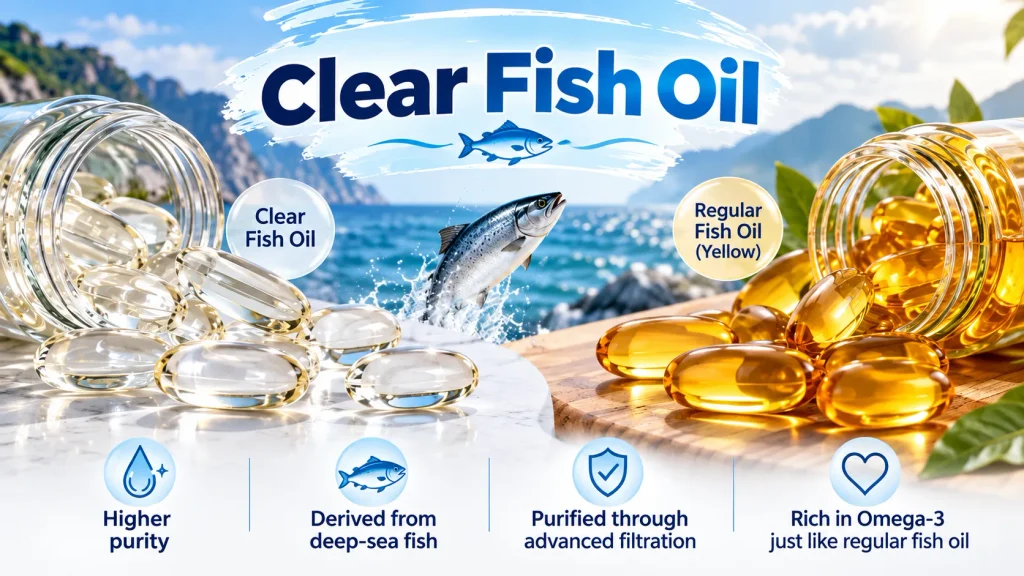
supplement industry. Its distinguishing feature is its lighter color or greater transparency compared to conventional fish oil, which typically has a yellowish appearance.
The clarity of fish oil may result from refining and purification processes that remove unwanted components, such as pigments, odors, and certain impurities. However, clearer fish oil does not necessarily indicate superior quality compared to yellow fish oil, as overall fish oil quality depends on several factors that must be evaluated together.
What Is Clear Fish Oil?
Clear Fish Oil is fish oil that has undergone refining and purification processes, resulting in a lighter color or clearer appearance. The technologies and processing methods used may vary among manufacturers.
One technique commonly used in the industry is Molecular Distillation, a vacuum-based distillation process that can separate oil components and increase the concentration of Omega-3 fatty acids, such as EPA and DHA. Through carefully controlled, multi-stage processing, the resulting fish oil may have a lighter color and greater clarity compared to conventional fish oil.
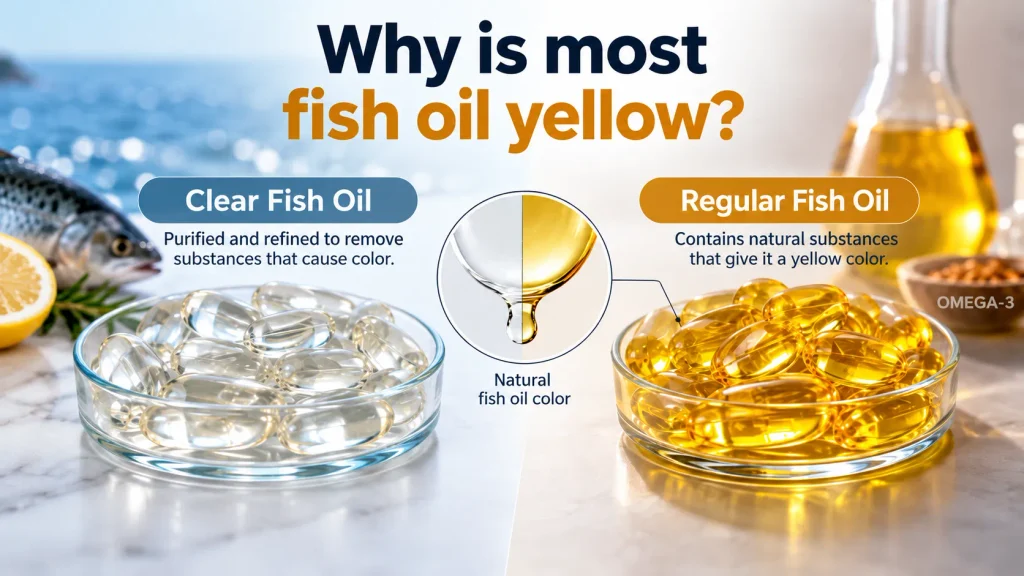
Why Is Conventional Fish Oil Yellow?
The color of fish oil can vary depending on the type of raw materials, fish species and sources, extraction methods, and purification processes. Therefore, yellow-colored fish oil does not necessarily indicate lower quality, just as clear fish oil is not always superior. Color is simply a physical characteristic of fish oil and should not be considered a primary indicator of its quality.
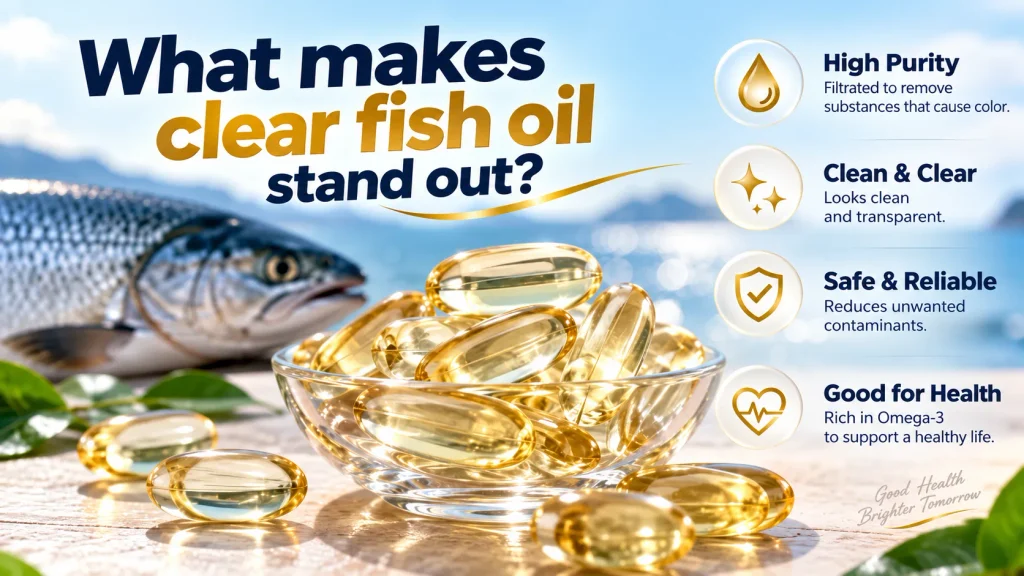
What Are the Key Advantages of Clear Fish Oil?
The key advantages of Clear Fish Oil lie in advanced processing techniques that allow for more precise control over raw material quality, including:
- Removing unwanted components and impurities from the oil.
- Controlling the oil’s color and odor.
- Increasing Omega-3 concentrations to meet specific product specifications.
- Creating a distinctive product image and market differentiation for Fish Oil supplements.
Clear Fish Oil is therefore well-suited for developing dietary supplements positioned around quality, advanced ingredient technology, and the Premium Fish Oil market segment.
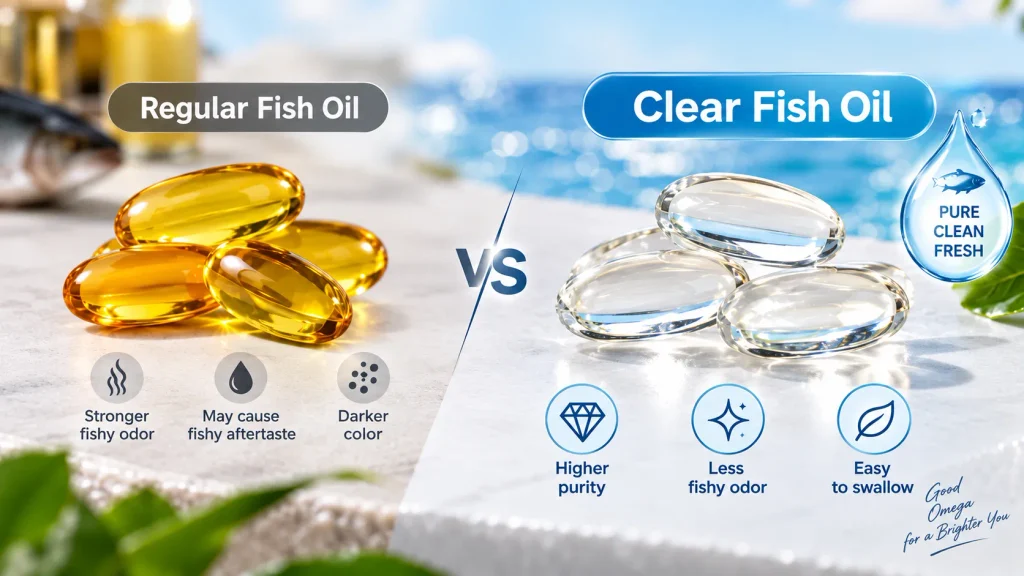
Is Clear Fish Oil Better Than Yellow Fish Oil?
The answer is that fish oil quality cannot be determined by color alone. To evaluate the quality of fish oil, several key factors should be considered, including EPA and DHA content, oxidation levels, contaminant testing results, and raw material specifications.
Common indicators used to assess fish oil oxidation include Peroxide Value (PV), p-Anisidine Value (p-AV), and TOTOX (Total Oxidation Value).
Therefore, when comparing Clear Fish Oil with yellow fish oil, it is more reliable to evaluate actual laboratory test results rather than judging quality solely by the oil’s clarity.
Does Clarity Matter?
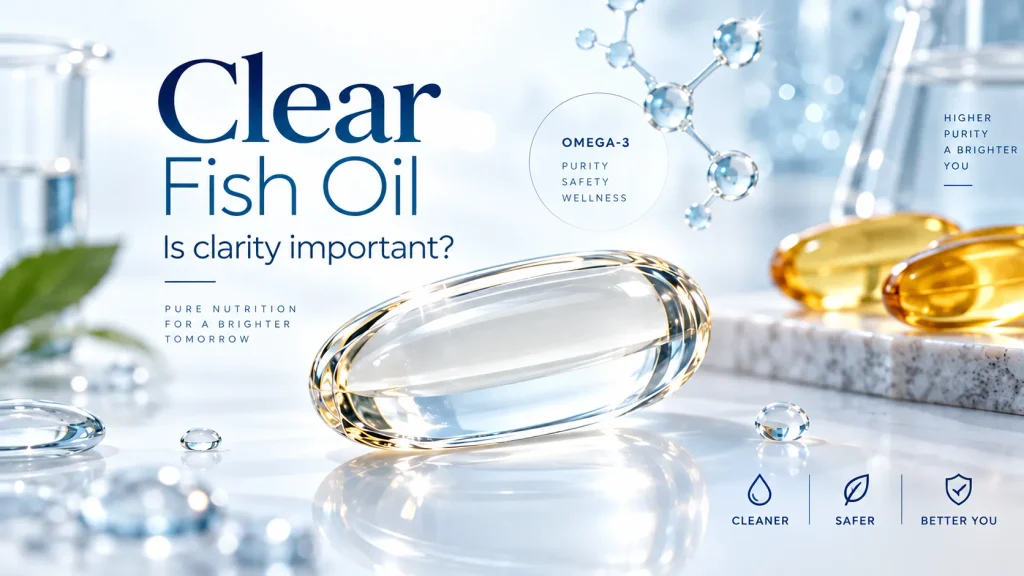
Clarity is an important characteristic, as it may reflect the refining or purification processes used for the raw material and help differentiate a product in the market. However, brand owners should consider clarity as part of the product concept rather than assuming that “clearer means better.” To support product quality claims, additional information should be considered, including EPA and DHA content, manufacturing processes, and relevant laboratory test results.
What Is the Difference Between Clear Fish Oil and Conventional Fish Oil?
Clear Fish Oil is fish oil that has undergone refining and purification processes to achieve a lighter or clearer appearance. Technologies such as Molecular Distillation may be used to separate components and increase the concentration of Omega-3 fatty acids.
Its key advantage is the potential to develop modern, differentiated Fish Oil products. However, clarity alone does not determine quality. High-quality fish oil should also be evaluated based on EPA/DHA content, oxidation levels, contaminants, and raw material standards.
For brand owners interested in developing Fish Oil or Softgel supplements, Maydi International provides comprehensive One Stop Service solutions, from raw material selection and formulation development to finished product manufacturing.